Posts

GTS M&M Catch Up

Image
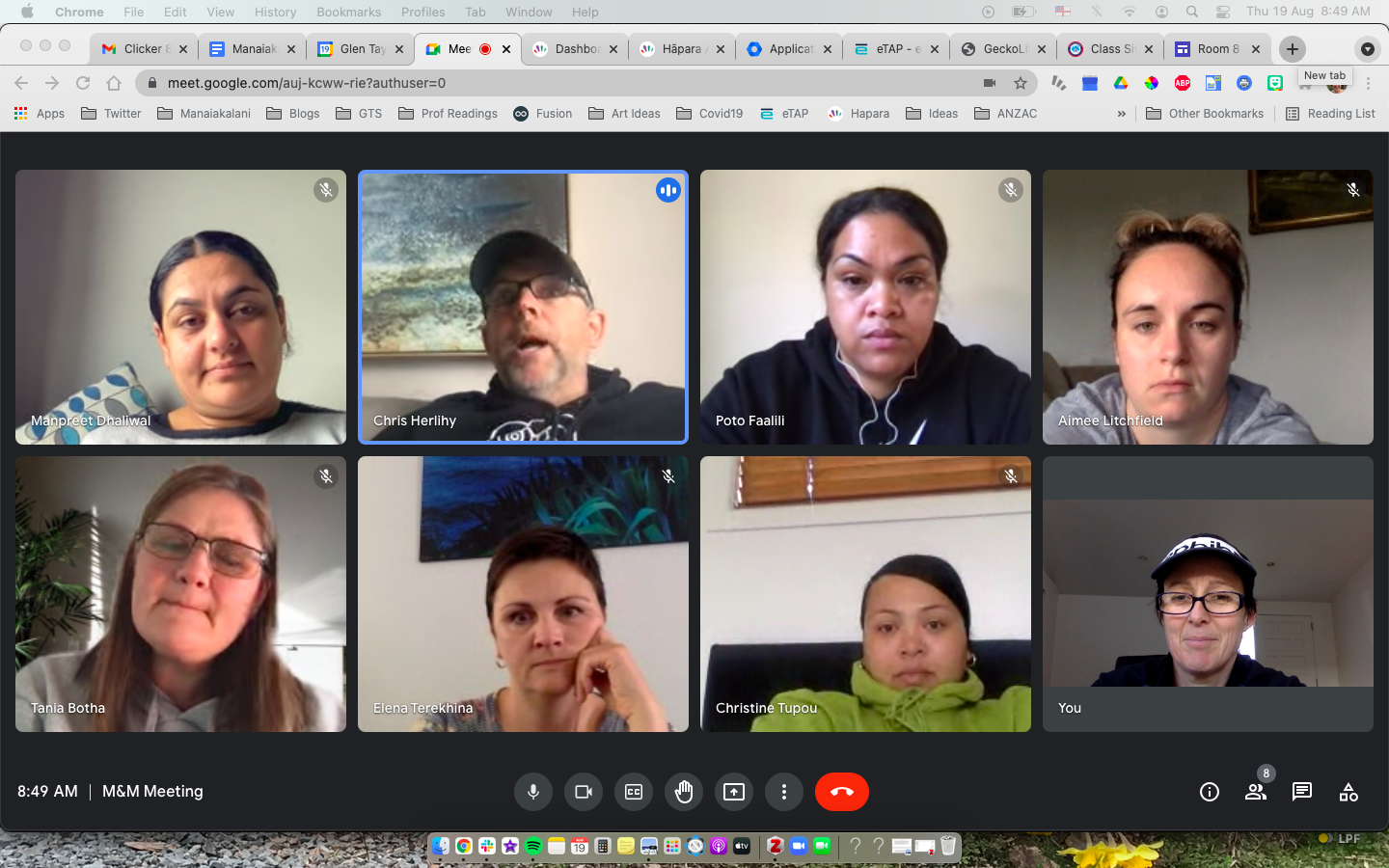
M&M Catch Up - Manaiakalani & a Masters I enjoy our catchups. This catchup was set in the holidays and lockdown didn't stop us.  In our team at GTS we have Chris, myself, Christine, Elena, Tania, Manpreet, Aimee with Manaiakalani roles and Johanna working on her Masters, hence the name M&Ms.  The most recent CoL PLG, we were given time to talanoa and connect with other CoL teachers. In this talanoa, I connected with Christine Tupou-Fonua from GTS and Dorothy Apelu from Tamaki College. From this Talanoa we were inspired to create something new for our students, bridging that gap between Year 8 and high school and are looking into creating a mentoring group that will help with this.  Working with Hiss Hass Hoos boys this term - 3 times a week, Tuesday-Thursday 1:30 -2:15. I'd noticed that we'd spend almost have the time eating (leftovers from the staffroom) and so I tried changing it. The boys weren't having it. They were upset that I'd changed it so it we...

Share Staff Meeting - Connecting with other educators

Image
Monday Share Staff Meeting - Sharing and connecting with other teachers from around the motu. The focus for our talanoa today was CULTURALLY RESPONSIVE PRACTICE. We shared about the WHAT, WHY, HOW to be culturally responsive in our practice.  The key takeaways from today's korero...  • Professional Reading - What is culturally responsive teaching. The Education Hub.  • Culturally responsive practice comes first.  • Know your learner. Not just levels but WHO they are, what makes them tick, their stories, strengths and weaknesses • Find that one thing that makes them spark - and roll with it! Use it to drive their learning.  • Use their interests to drive their learning - integrate this as much as you can into your classroom planning and teaching. • HAVE FUN with them! • Respond to their needs

Update on the Hiss Hass Hoos Boys

Image
So where are we up to?  After deciding that the project was going to be 'The Taste of the Pacific' we've spent the last 4 weeks getting our menu sorted, all our numbers for the food and working on a proposal letter, asking Mr Herlihy if we could use some of the school money. Unpacking the learning was the easy part for me - aligning the learning with their needs and expectations. What was tricky was establishing group expectations, purpose and attitudes. This was highlighted in my previous post about the Boys.  This is a screenshot of their working doc which they titled 'Food Pricing'  After deciding on the menu,  our sessions were looking at recipes (reading, listening). We had lots of talanoa about how we cook certain foods at home, and were able to draw connections to our own cultures. Two of the boys are ESOL learners, so to have them speak so openly and confidently was really a special moment.  Week 1 - Two columns: Food & ingredients Week 2 - Added in...

Planning and conducting detailed inquiry

Image
1. Plan and conduct detailed inquiry into specific aspects of your current teaching that are relevant to the hypothesis you identified in the literature. Inquiring into your teaching should give you: a) formative information about your current strengths and ares for development. b) baseline information that you can use at the end of the year to provide evidence of shifts in teaching.  Based on the research, professional readings and reflection into my own teacher practice, I have identified the following as my detailed inquiry that I aim to undertake with my target group; Hiss Hass Hoos Boys.  - See the boys every day, 1:30pm in their office aka my office space. - 4 sessions will be used on planning and learning for their integrated project 'The Taste of the Pacific' - 1 session will be used to support them with other work they have in class that they need support in. It's important that this session is flexible enough to fit their needs and still maximising the time that w...

The domino effect

Image
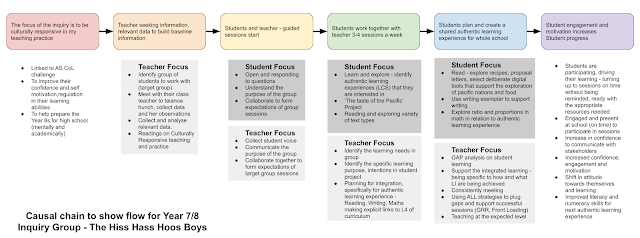
The causal chain - What is it?  A causal chain is when a cause leads to an effect and that effect becomes the cause of another effect A leads to B. B leads to C. C leads to D. Any intervention you design will (consciously or not) be based on a causal chain you have in mind - this is your theory of action. The image below highlights the causal chain to show flow for my Year 7/8 Inquiry Group - The Hiss Hass Hoos Boys. One thing that I haven't mentioned on my causal chain is address the issue of a group of them always late. I timetabled the group so that I see them first thing in the morning. This, I hope will encourage them to be at school on time, ready for learning. Milo with Mrs Faalili is also on the menu - breakfast club 8:30am as another way to build relationships with the group. 

PLD - Aro Tåkaro (Maori Kemu in the classroom)

Image
  If I was to summarise the key things I took away from this Professional Development what would they be and why? The adaptation of traditional Maori Kemu in an educational setting isn't as hard as I think it is. Kupu and tikanga can be practised in all learning settings and that we shouldn't be afraid of getting it wrong. How has this professional development challenged my thinking? That I may be overthinking Maori Tikanga practises in regards to Maori kemu - the 'Oh, I shouldn't do this because ...' or 'I don't think this is culturally appropriate' but this PLD was permission in making adaptions, however, paying the respects and acknowledging the change/adaption in the teaching of the kemu.  What aspects of my practice would I consider changing as a result of this professional development and why? The sourcing of resources, encouraging the use of traditional resources over store bought and encouraging sustainability in the creation and maintaining...

In class support - How it's going so far

At the end of term 1, I met with DP of school A to discuss what support was needed and to start thinking of a plan forward. At this talanoa, two teachers had been identified as needing support in teaching maths and this was driven by their current data. • Data - their current data for Years 5 & 6 were an area of concern. • Planning - access was shared with teacher planning and overviews for the upcoming term. • Next steps - what I could offer as support for these two teachers and what the next step would look like for me, coming in to support these teachers. I spent the next few weeks looking at their planning via their class sites, unpacking what maths concepts and strategies were being planned for and what the new learning would be for students. We were initially meant to start with classroom observations Week 1 of term 2 but unfortunately had to be rescheduled. My findings in the weeks spent unpacking their planning through their class site • Students grouped based on ability • ...